
Urinalysis, a cornerstone of medical diagnostics, offers a rapid and non-invasive assessment of health, potentially revealing conditions like diabetes or renal disease.
Accurate interpretation is crucial for healthcare professionals, ensuring the test’s benefits are fully realized, as highlighted in recent multicentre prospective studies.
Historically, urine observation has aided disease diagnosis for centuries, and remains vital in modern medicine, alongside evolving technologies and standardized forms.
Monitoring urine characteristics – color, smell, and presence of blood – provides valuable insights into hydration levels and potential underlying health concerns.
Utilizing a standard PDF form streamlines data collection, tracking, and analysis, facilitating comprehensive patient care and informed clinical decision-making.
What is Urinalysis?
Urinalysis is a group of tests performed on your urine sample, offering a valuable snapshot of your overall health. It’s a common diagnostic tool used by healthcare professionals to detect and manage a wide range of conditions, from urinary tract infections to more serious systemic diseases like diabetes and kidney disease. The process involves visual examination, chemical analysis using a dipstick, and microscopic examination of the urine sediment.
The dipstick component, central to rapid screening, utilizes a chemically treated strip that reacts with various substances in the urine, providing quick, semi-quantitative results. These results, often documented on a urinalysis dipstick results form PDF, help guide further investigation. The form standardizes data collection, ensuring consistency and facilitating accurate tracking of patient results over time.
Historically, observing urine’s appearance has been a diagnostic practice for centuries, but modern urinalysis, aided by standardized forms and technology, provides a far more detailed and reliable assessment. Analyzing electrolytes, proteins, and bacteria within the urine sample offers crucial insights into bodily functions and potential health issues.
The Importance of Accurate Interpretation
Accurate interpretation of urinalysis results is paramount, as even subtle abnormalities can indicate significant underlying health conditions. Relying solely on dipstick readings without considering the patient’s clinical presentation can lead to misdiagnosis or delayed treatment. A standardized urinalysis dipstick results form PDF plays a vital role in minimizing errors by providing a structured framework for recording and reviewing findings.
Healthcare professionals must be proficient in recognizing the limitations of the dipstick test and understanding potential sources of error. False positives and false negatives can occur, necessitating correlation with other diagnostic tests and a thorough patient history. The PDF form aids in this process by allowing for detailed documentation of observations and relevant clinical data.

Recent studies emphasize the need for careful analysis, particularly in pediatric populations, highlighting the importance of point-of-care testing and accurate record-keeping facilitated by standardized forms. Proper interpretation ensures effective patient care and avoids unnecessary interventions.

Understanding the Urinalysis Dipstick
Dipsticks utilize chemical reactions to detect substances in urine, offering a quick screening tool; a PDF form aids result documentation.
Components of a Standard Dipstick
Standard urinalysis dipsticks are comprised of a plastic strip with multiple reagent pads, each designed to detect a specific analyte within the urine sample. These pads react with components present in the urine, causing a color change proportional to the concentration of the substance. Common parameters assessed include pH, specific gravity, protein, glucose, ketones, blood, bilirubin, urobilinogen, nitrite, and leukocyte esterase.
The consistent layout and standardized reagents across dipsticks ensure comparability of results between different laboratories and healthcare settings. A well-designed urinalysis dipstick results form (PDF) should mirror this structure, providing dedicated fields for each parameter’s corresponding color reaction and quantitative value. This facilitates accurate recording and interpretation, linking the visual assessment of the dipstick to a structured data format for further analysis and tracking of patient health trends over time.
The PDF form’s organization should directly correlate with the dipstick’s components, enhancing workflow efficiency.
How the Dipstick Test Works
The dipstick test begins with immersing the reagent strip into a freshly collected urine sample for a specified duration, typically a few seconds. This allows for a chemical reaction between the reagents on each pad and the urine’s constituents. The intensity of the resulting color change is then visually compared to a color chart provided on the dipstick’s container, yielding a semi-quantitative estimate of the analyte’s concentration.
Accurate recording of these results is paramount, and a urinalysis dipstick results form (PDF) plays a critical role. The PDF should include sections for documenting the color reaction observed for each parameter, alongside corresponding numerical values or qualitative descriptors (e.g., trace, small, moderate, large). This standardized documentation ensures consistency and facilitates effective tracking of patient data, supporting informed clinical decisions and longitudinal health monitoring.
Proper form completion is key to reliable interpretation.
Key Parameters Measured by the Dipstick
Dipsticks assess pH, specific gravity, protein, glucose, ketones, blood, bilirubin, urobilinogen, nitrite, and leukocyte esterase – all documented on the PDF form.
pH Levels and Their Significance
Urine pH, a key parameter recorded on the urinalysis dipstick results form PDF, reflects the body’s acid-base balance and can indicate various underlying conditions. Typically, normal urine pH ranges from 4.5 to 8, though variations occur based on diet and metabolism.
Acidic urine (below 5.5) may suggest a high-protein diet, metabolic acidosis, or certain medications, while alkaline urine (above 7.5) can indicate vegetarian diets, urinary tract infections – particularly those caused by urea-splitting organisms – or renal tubular acidosis.
Accurate pH measurement, documented within the PDF, is crucial as it influences the solubility of certain substances in urine, impacting the formation of crystals and stones. Monitoring pH trends using the form aids in assessing kidney function and guiding appropriate interventions. Deviations from the normal range warrant further investigation.
Specific Gravity: Assessing Hydration
Specific gravity, a vital component captured on the urinalysis dipstick results form PDF, measures urine concentration – essentially, how much solutes are present relative to water. It’s a primary indicator of hydration status, reflecting the kidneys’ ability to concentrate or dilute urine.
A high specific gravity (above 1.020) suggests concentrated urine, often indicating dehydration, decreased blood flow to the kidneys, or conditions like heart failure. Conversely, a low specific gravity (below 1.005) points to diluted urine, potentially due to excessive fluid intake, diabetes insipidus, or impaired kidney function.
Consistent tracking of specific gravity via the PDF form allows healthcare professionals to monitor fluid balance and assess renal function over time. Observing pale or dark urine color, alongside specific gravity readings, provides a comprehensive hydration assessment.
Proteinuria: Detecting Kidney Issues
Proteinuria, the presence of protein in urine, is a key finding assessed via the urinalysis dipstick and meticulously documented on the results form PDF. Normally, kidneys prevent significant amounts of protein from spilling into the urine; its detection signals potential kidney damage.
Levels ranging from trace to 4+ indicate varying degrees of protein excretion. Transient proteinuria can occur due to fever, strenuous exercise, or dehydration, but persistent findings warrant further investigation. Conditions like glomerular diseases, hypertension, and diabetes are common causes.
The PDF form facilitates longitudinal tracking of protein levels, enabling clinicians to monitor disease progression or treatment effectiveness. Early detection of proteinuria is crucial, as it can be a sign of developing renal disease, potentially leading to life-changing conditions.
Glucose: Screening for Diabetes
Glucose detection in urine, assessed via the dipstick and recorded on the urinalysis results form PDF, serves as a screening tool for diabetes mellitus. Typically, the kidneys efficiently reabsorb glucose; its presence suggests blood glucose levels exceed the renal threshold.
A positive result doesn’t automatically confirm diabetes, as factors like pregnancy or high carbohydrate intake can cause temporary glucosuria. However, it necessitates further investigation, such as a fasting blood glucose test or HbA1c measurement.
The PDF form allows for consistent documentation of glucose findings, aiding in monitoring patients at risk; Early identification of glucosuria can prompt timely intervention, potentially preventing the development of severe diabetic complications and life-changing conditions.
Ketones: Identifying Metabolic Abnormalities
Ketones in urine, detected using the dipstick and meticulously documented on the urinalysis results form PDF, indicate the body is metabolizing fat for energy instead of glucose. This often occurs during periods of fasting, prolonged strenuous exercise, or in uncontrolled diabetes.
Significant ketonuria can signal diabetic ketoacidosis (DKA), a serious and potentially life-threatening complication. The PDF form’s standardized format ensures accurate recording of ketone levels, facilitating timely clinical assessment.
Monitoring ketone presence is crucial, especially in diabetic patients, as it guides treatment adjustments. The form allows healthcare professionals to track trends and correlate ketone levels with other parameters, improving patient management and preventing adverse outcomes.

Blood: Potential Causes and Concerns
Hematuria, or blood in the urine, detected via the dipstick and carefully recorded on the urinalysis results form PDF, warrants investigation as it can stem from various causes, ranging from benign to serious. These include urinary tract infections (UTIs), kidney stones, glomerular diseases, and even bladder or kidney cancer.
The PDF form’s structured layout allows for precise documentation of blood level (trace, small, moderate, large), aiding in assessing the severity and guiding further diagnostic testing. Accurate recording is vital, as even microscopic hematuria requires evaluation.
Correlation with clinical symptoms and other dipstick parameters, all captured within the PDF, helps differentiate between causes and determine the appropriate course of action, ensuring optimal patient care.
Bilirubin: Liver Function Assessment
Bilirubin presence in urine, identified by the dipstick and meticulously documented on the urinalysis results form PDF, signals potential liver dysfunction or biliary obstruction. This occurs when the liver cannot effectively process bilirubin, a byproduct of red blood cell breakdown.
The PDF form facilitates standardized recording of bilirubin levels, enabling clinicians to track changes over time and assess the progression of liver-related conditions. Positive results necessitate further investigation, such as liver function tests and imaging studies.
Careful documentation within the PDF, alongside other dipstick findings and clinical observations, aids in differentiating between various causes of bilirubinuria and formulating an accurate diagnosis.
Urobilinogen: Evaluating Liver Health & Hemolysis
Urobilinogen, a colorless compound formed from bilirubin in the intestines, is another key indicator assessed via urinalysis, with results precisely recorded on the standardized PDF form. Elevated levels can suggest liver disease, particularly conditions affecting bilirubin metabolism or increased red blood cell breakdown (hemolysis).
The PDF form’s structured data fields allow for consistent tracking of urobilinogen concentrations, aiding in the differentiation between hepatic and hemolytic causes. Conversely, low or absent urobilinogen may indicate biliary obstruction.
Accurate documentation within the PDF, combined with other dipstick parameters and clinical context, is crucial for comprehensive evaluation of liver health and potential hemolytic processes.
Nitrite: Indicating Bacterial Infection
Nitrite testing on the urinalysis dipstick, meticulously documented on the standardized PDF form, serves as a crucial indicator of potential bacterial infection within the urinary tract. Many bacteria convert nitrate, normally present in urine, into nitrite, triggering a positive result.
A positive nitrite reading, clearly flagged within the PDF’s data fields, strongly suggests a urinary tract infection (UTI), prompting further investigation. However, it’s important to note that not all bacteria produce nitrite, leading to potential false negatives.

The PDF form facilitates consistent recording of nitrite results alongside other parameters, aiding clinicians in accurate diagnosis and appropriate treatment decisions.
Leukocyte Esterase: Detecting White Blood Cells
Leukocyte esterase detection, a key component of the urinalysis dipstick and meticulously recorded on the standardized PDF form, indicates the presence of white blood cells (WBCs) in the urine. WBCs signify an inflammatory response, often due to infection, but also potentially from kidney disease or tissue damage.
A positive result, clearly indicated within the PDF’s designated data field, suggests inflammation within the urinary tract. Like nitrite testing, it aids in UTI diagnosis, but can also point to other conditions requiring further investigation.
The PDF form’s structured layout allows for easy comparison of leukocyte esterase levels with other parameters, supporting comprehensive clinical assessment and informed decision-making.

Urinalysis Dipstick Results Form (PDF)
Standard PDF forms streamline urinalysis data, enabling efficient recording of dipstick results, facilitating tracking, and supporting comprehensive analysis for better patient care.
Features of a Standard PDF Form
A typical urinalysis dipstick results PDF form is designed for clarity and ease of use, incorporating essential fields for comprehensive data capture. These forms generally include dedicated sections for patient demographics – name, date of birth, medical record number – ensuring accurate identification and record linkage.
Crucially, the form features a visual representation of the dipstick itself, with corresponding boxes to record the results for each parameter: pH, specific gravity, protein, glucose, ketones, blood, bilirubin, urobilinogen, nitrite, and leukocyte esterase.

Many forms also include space for recording the date and time of the test, the initials of the performing technician, and any relevant clinical observations. Some advanced forms may even incorporate quality control checks and prompts for further investigations based on abnormal results, aiding in clinical decision-making and ensuring thorough patient assessment.
The PDF format allows for easy electronic storage, retrieval, and sharing of results, promoting efficient workflow and collaboration among healthcare professionals.
Data Fields and Their Purpose
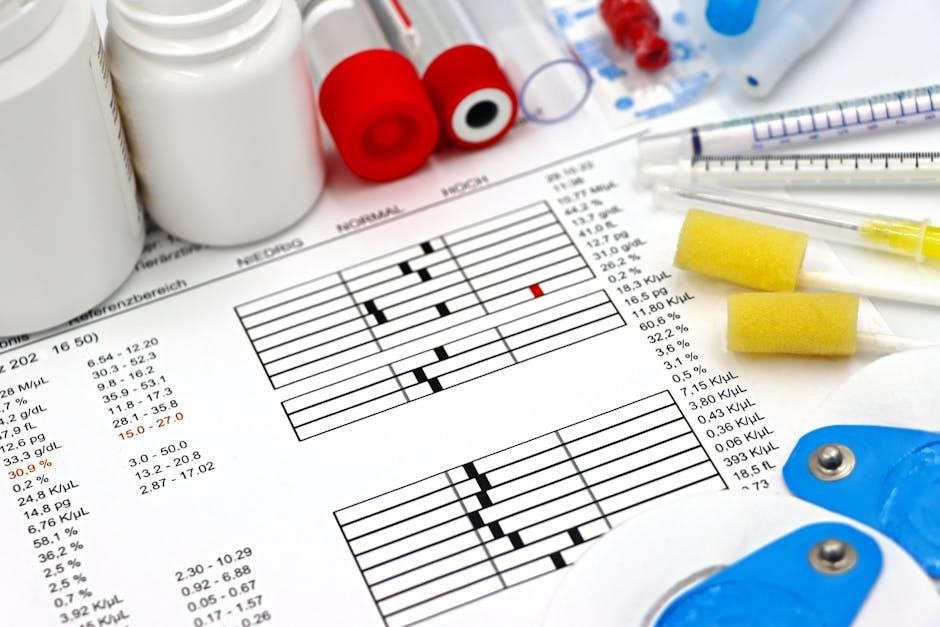
Each data field within a urinalysis dipstick results PDF form serves a specific purpose in accurately documenting and interpreting the test. Patient identifiers – name, DOB, MRN – ensure correct record association and prevent errors. The ‘Date/Time’ field establishes test chronology, vital for tracking changes over time.
Fields for each dipstick parameter (pH, specific gravity, protein, etc.) record the quantitative or qualitative result, allowing for immediate assessment against normal ranges. Technician initials ensure accountability and traceability of the testing process.
‘Clinical Notes’ provide space for contextual information, linking test results to patient symptoms or medical history. Sections for ‘Follow-up Tests’ prompt further investigation when abnormalities are detected, supporting comprehensive diagnosis. The structured format of these fields facilitates data analysis and trend identification, ultimately improving patient care.
Using the PDF for Tracking and Analysis
A standardized PDF urinalysis dipstick results form enables efficient tracking of patient data over time, facilitating longitudinal analysis. Digital storage allows for easy retrieval and comparison of results, identifying subtle changes that might indicate developing conditions. The form’s structured format supports data entry into electronic health records (EHRs), streamlining workflows.
Trend analysis becomes simpler, allowing clinicians to monitor the effectiveness of treatments or the progression of diseases like diabetes or renal issues. Batch processing of completed forms enables population health studies, identifying patterns and improving preventative care strategies.
PDFs also support quality control initiatives, ensuring consistent testing procedures and accurate result reporting, ultimately enhancing patient safety and diagnostic reliability.

Further Investigations Based on Results
Abnormal dipstick results, documented on the PDF form, often necessitate additional testing to confirm diagnoses and guide appropriate treatment strategies for patients.
When Additional Testing is Necessary
Consistent abnormalities flagged on the urinalysis dipstick results form, particularly proteinuria, glucosuria, or hematuria, strongly indicate the need for further investigation.
A positive nitrite or leukocyte esterase result, meticulously recorded on the PDF, suggests a potential urinary tract infection demanding bacterial culture and sensitivity testing.
Elevated bilirubin or urobilinogen levels, noted within the form’s data fields, warrant liver function tests to assess hepatic health and identify underlying causes.
Ketones in urine, clearly indicated on the PDF, require evaluation for diabetic ketoacidosis or other metabolic disturbances, often involving blood glucose monitoring.
Discrepancies between dipstick results and clinical presentation, as tracked through the PDF, always prompt further diagnostic workup to ensure accurate diagnosis.
Ultimately, the urinalysis dipstick serves as a valuable screening tool, but definitive diagnoses rely on comprehensive testing guided by the PDF’s documented findings.
Correlation with Clinical Symptoms
Effective diagnosis hinges on correlating urinalysis dipstick results, meticulously documented on the PDF form, with the patient’s reported clinical symptoms.
For instance, hematuria identified on the PDF, alongside flank pain, necessitates investigation for kidney stones or other urological issues.
Proteinuria, recorded within the form’s data fields, coupled with edema, strengthens suspicion of renal disease requiring further assessment.
Glycosuria noted on the PDF, alongside polydipsia and polyuria, supports a diabetes diagnosis, prompting glucose tolerance testing.
Dysuria and frequency, reported by the patient, alongside a positive nitrite or leukocyte esterase on the PDF, confirms a urinary tract infection.
The PDF form facilitates a holistic view, enabling clinicians to integrate lab findings with patient history for accurate and timely interventions.