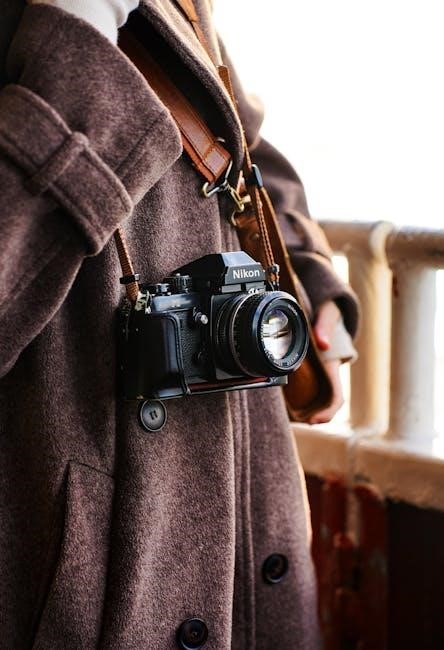
Nikon FE2: A Comprehensive Manual Overview (Updated 04/07/2026)
This manual details the Nikon FE2, a classic 35mm SLR, offering guidance on its features and operation. It’s a resource for both new and experienced users.
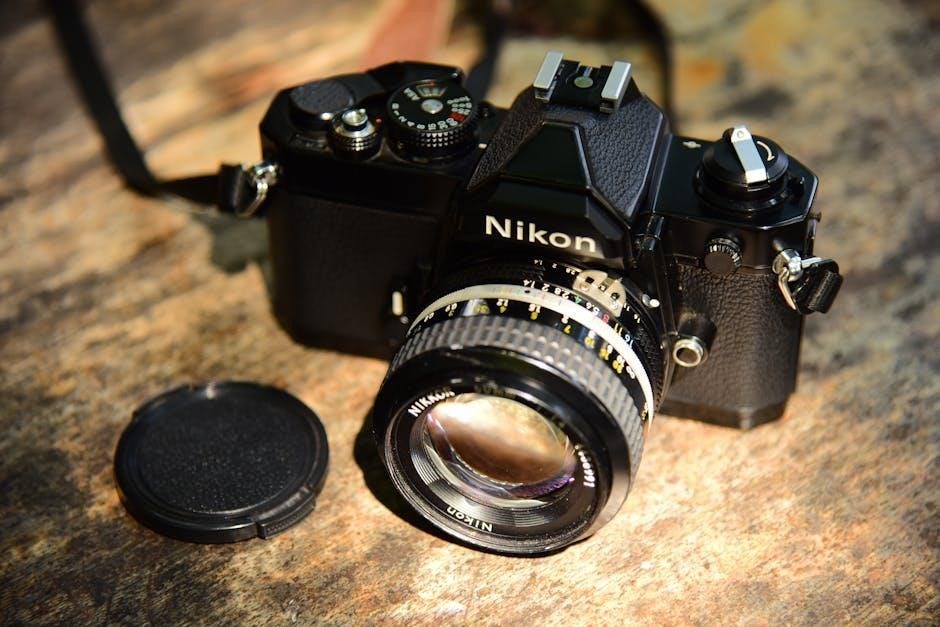
The Nikon FE2, released in 1983, represents a pivotal point in Nikon’s history, blending advanced features with robust mechanical reliability. This camera, a successor to the FE, quickly gained popularity among photography enthusiasts due to its aperture-priority auto-exposure mode and exceptional build quality. It’s a fully mechanical camera with electronic shutter speed control, offering a unique balance for photographers seeking both control and convenience.
This guide serves as a comprehensive resource for understanding and utilizing the Nikon FE2. Whether you’re a seasoned photographer revisiting a classic or a newcomer exploring film photography, this manual will provide detailed insights into its operation, features, and potential. We will explore everything from loading film to mastering its metering system.
Historical Context and Significance
The Nikon FE2 emerged during a period of significant transition in the photographic industry, as automation began to reshape camera design. Released in 1983, it positioned itself between the fully mechanical FM series and the more electronically driven F3. This strategic placement appealed to photographers who valued mechanical dependability but desired the convenience of automatic exposure.
Its significance lies in offering a sophisticated, yet accessible, entry point into Nikon’s professional-grade system. The FE2’s aperture-priority mode simplified exposure control, while retaining full manual capabilities for experienced users. It became a favorite among photojournalists and serious amateurs, solidifying Nikon’s reputation for quality and innovation during a competitive era.
Key Features and Specifications
The Nikon FE2 boasts a horizontally-traveling metal focal-plane shutter, offering speeds from 2 to 1/4000th of a second, plus Bulb. It features a center-weighted metering system, crucial for balanced exposures; The camera accepts AI and AIS lenses, providing a vast selection of optics. Its aperture-priority auto exposure mode simplifies shooting, while full manual control remains available.
Key specifications include a standard 5-frame sequential film advance, and compatibility with Nikon’s dedicated flash units. The FE2 utilizes a 4LR44/PX28 battery for power. Its robust build quality and reliable performance made it a workhorse for professionals and enthusiasts alike, cementing its place in photographic history.
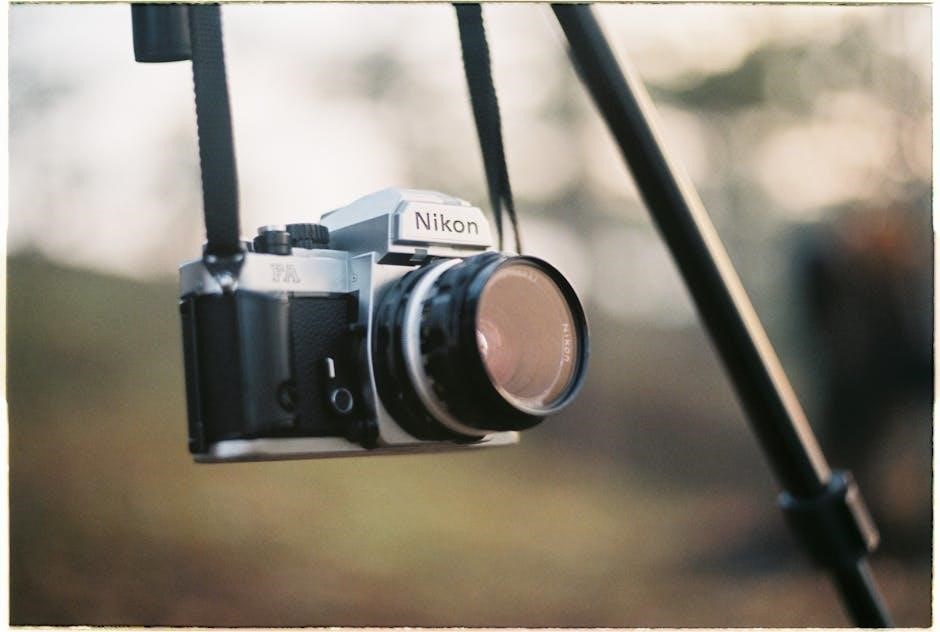
Understanding the Nikon FE2 Body
The FE2’s body is designed for durability and ease of use, featuring clearly labeled controls and a comfortable grip for extended shooting sessions.
Physical Controls and Their Functions
The Nikon FE2 boasts a thoughtfully designed array of physical controls, each serving a specific function to enhance the photographic experience. The shutter speed dial, prominently positioned on the top plate, allows for precise control over exposure time, ranging from 2 seconds to 1/2000th of a second. Adjacent to it is the film speed dial, crucial for setting the ISO sensitivity of the loaded film.
The aperture priority mode selector enables photographers to prioritize depth of field, while the camera automatically determines the appropriate shutter speed. The film rewind crank and film advance lever facilitate smooth and reliable film handling. The depth-of-field preview lever provides a visual representation of the image’s sharpness at the selected aperture. Finally, the self-timer button initiates a delayed shutter release, perfect for self-portraits or group shots.
Viewfinder Information and Display
The Nikon FE2’s viewfinder provides essential information for accurate exposure and focusing. Through the pentaprism, photographers view a bright and clear image, complemented by a center-weighted metering display. This display utilizes LEDs to indicate underexposure (-1, -2), correct exposure (0), and overexposure (+1, +2), assisting in achieving properly exposed photographs.
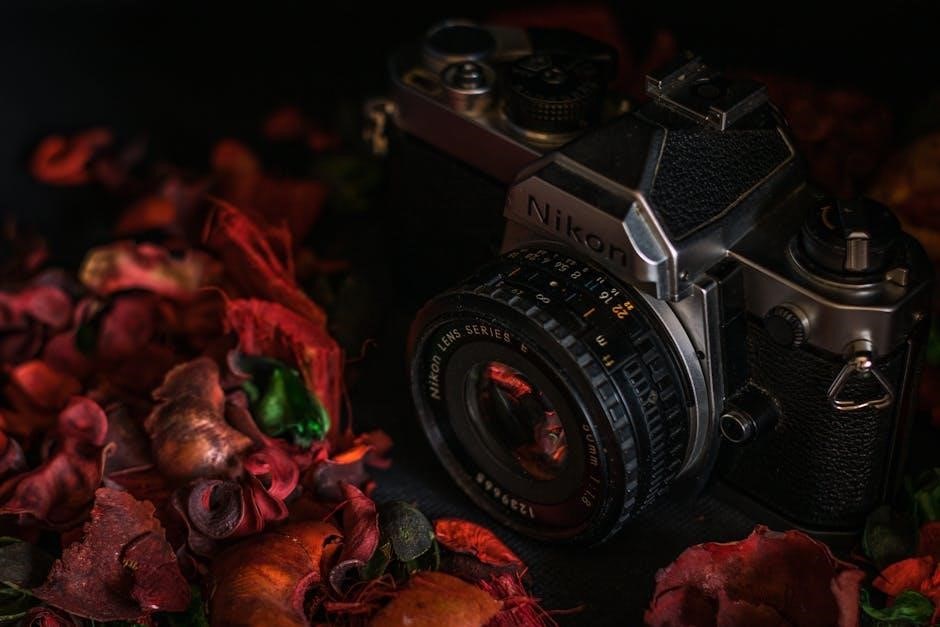
Additionally, the viewfinder shows the selected shutter speed, confirming the camera’s automatic selection in aperture-priority mode. A split-image focusing aid in the center of the viewfinder facilitates precise manual focusing. The viewfinder also includes a confirmation when the self-timer is activated, ensuring the photographer is aware of the impending shutter release. These elements combine to offer a comprehensive and intuitive viewing experience.
Film Loading and Advance Mechanism
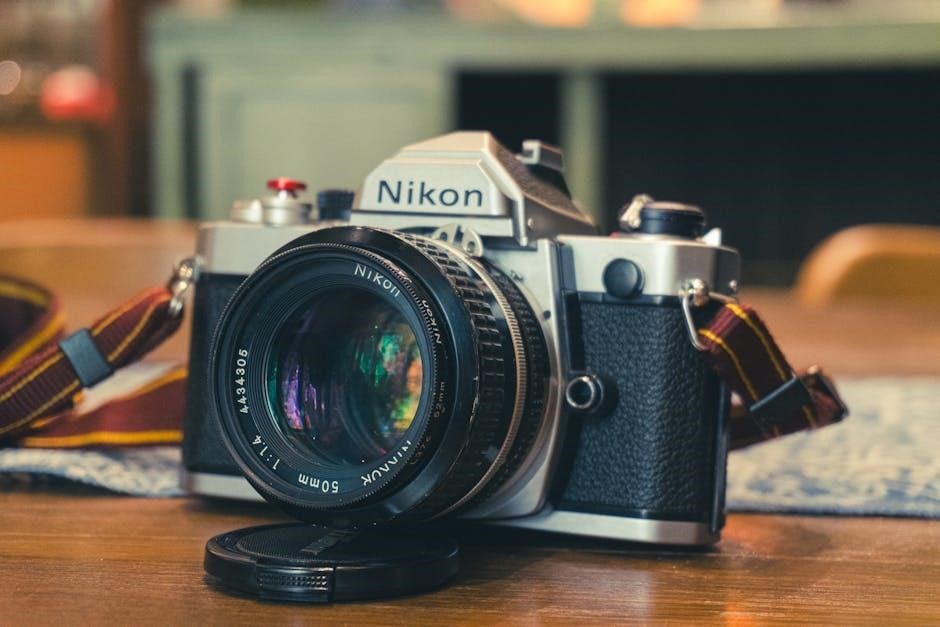
Loading film into the Nikon FE2 is a straightforward process. Open the camera back using the film rewind knob. Place the 35mm film canister into the left-side chamber and thread the film leader onto the take-up spool on the right. Advance the film using the manual film advance lever, ensuring the sprocket holes engage properly.
The FE2 features a smooth and reliable manual film advance mechanism. After each exposure, fully stroke the lever to advance the film and cock the shutter. The film counter automatically displays the number of exposures taken. To rewind the film, press the film rewind release button and turn the rewind knob in the direction of the arrow until the film is fully retracted into the canister.
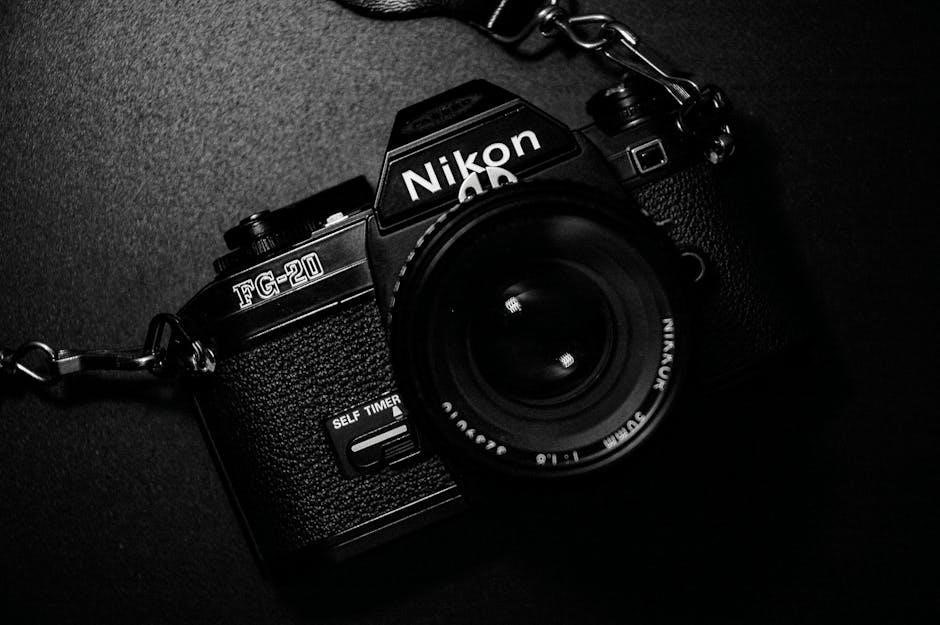
Exposure Control and Metering
The Nikon FE2 utilizes a center-weighted metering system, prioritizing light in the frame’s center for accurate exposure calculations in aperture priority mode.
Metering System Explained (Center-Weighted)
The Nikon FE2’s metering system is a center-weighted average, meaning it gives approximately 60% of its weighting to the central 8mm circle of the viewfinder. This prioritizes exposure readings from the area most often containing the primary subject. The remaining 40% is distributed across the rest of the frame, but with less influence.
This system is beneficial for general photography, as it closely mimics how the human eye perceives light. However, it’s crucial to understand its limitations. Strong backlight or very bright/dark areas outside the central circle can influence the reading. Users should employ exposure compensation (+/-) when shooting high-contrast scenes to achieve desired results. The meter displays a needle indicating underexposure, correct exposure, or overexposure, guiding adjustments for optimal image brightness.
Aperture Priority Mode Operation
The Nikon FE2 excels in Aperture Priority mode (A), allowing photographers to select the desired aperture (f-stop) for controlling depth of field. The camera then automatically sets the appropriate shutter speed for correct exposure, indicated in the viewfinder. This mode is ideal for creative control over focus and background blur.
To operate, set the lens to ‘A’ or ‘Av’. Choose your aperture based on the desired effect – larger apertures (smaller f-numbers) for shallow depth of field, smaller apertures (larger f-numbers) for greater depth of field. The FE2’s meter will display the calculated shutter speed. Be mindful of slow shutter speeds, potentially requiring a tripod to avoid camera shake. The camera will not allow an incorrect exposure.
Shutter Speed Control and Range
The Nikon FE2 offers a versatile shutter speed range, from 2 seconds to 1/2000th of a second. This broad range allows for capturing motion in various scenarios, from long exposures for blurred effects to fast shutter speeds for freezing action. Shutter speed is automatically selected in Aperture Priority mode, but manual control is also available.
To adjust manually, rotate the shutter speed dial located on the top plate. The selected speed is displayed in the viewfinder. Remember that slower speeds require a stable camera or tripod to prevent blur. The FE2 also features a Bulb (B) setting for exposures longer than 2 seconds, requiring a separate cable release. Understanding this range is crucial for creative control.
Focusing and Lenses
This section covers achieving sharp images with the Nikon FE2, detailing focusing screen options and compatibility with AI/AIS Nikon lenses.
Focusing Screen Options and Adjustment
The Nikon FE2 offers interchangeable focusing screens, allowing photographers to tailor the viewfinder experience to their specific needs. Standard screens provide a balance between brightness and focusing aids, while options like the split-image or microprism collars enhance precision, particularly for manual focusing. Adjusting the focusing screen involves carefully removing the top cover and gently lifting the screen.
It’s crucial to avoid touching the screen surface to prevent dust or fingerprints. Minor adjustments can be made to the screen’s position for optimal alignment with the rangefinder. Remember to handle the camera with care during this process, and consult the service manual if you’re uncomfortable performing this adjustment yourself. Proper screen selection and alignment contribute significantly to accurate focusing and overall image quality.
Compatible Nikon Lenses (AI/AIS)
The Nikon FE2 is fully compatible with Nikon AI and AIS lenses, representing a significant era of Nikon lens design. These lenses offer a wide range of focal lengths and apertures, catering to diverse photographic styles. AI lenses feature an aperture index mark, while AIS lenses have an aperture ring with click stops.
Older non-AI lenses can be used with an adapter, but full functionality may not be available. When mounting lenses, ensure proper alignment and a secure lock. The FE2’s aperture priority mode works seamlessly with AI/AIS lenses, allowing for creative control over depth of field. Utilizing these lenses unlocks the FE2’s full potential, delivering exceptional image quality and versatility.
Depth of Field Preview Lever
The Nikon FE2 features a depth of field preview lever, crucial for visualizing the extent of focus at a chosen aperture. Located near the lens mount, depressing this lever stops down the lens to the selected aperture, allowing you to assess the in-focus area through the viewfinder.
This is particularly useful for landscape and macro photography, ensuring critical elements are sharp. Remember that the viewfinder image will darken when the lever is engaged. Releasing the lever returns the lens to its maximum aperture, brightening the view. Mastering this feature enhances precise focusing and creative control over your images, maximizing the FE2’s capabilities.
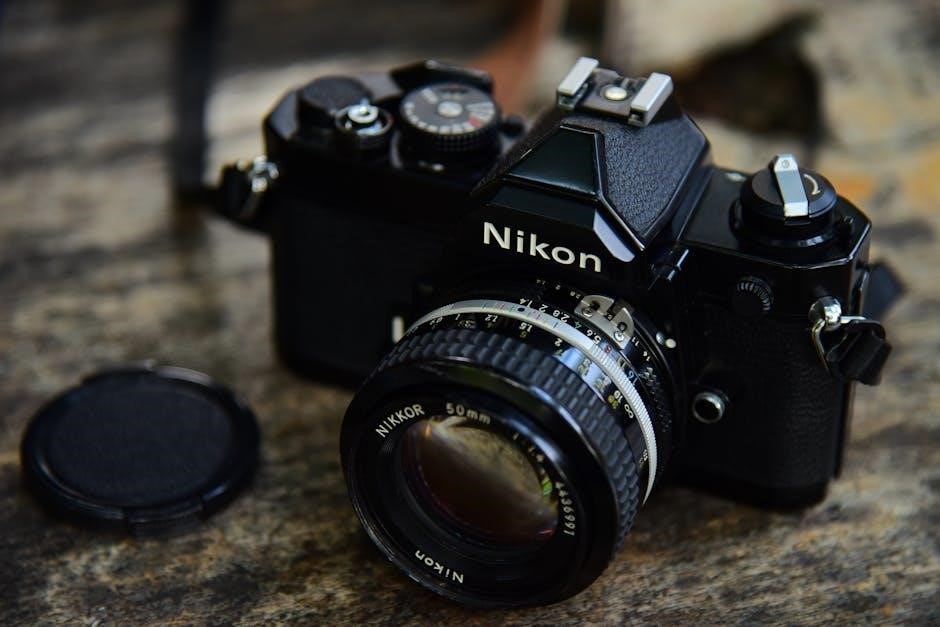
Advanced Features and Techniques
Explore the FE2’s creative potential with multiple exposures, the self-timer, and external flash options. These tools expand photographic expression and control.
Multiple Exposure Capability
The Nikon FE2 allows for creating multiple exposures on a single frame, opening doors to artistic and surreal imagery. To engage this feature, utilize the multiple exposure control lever located on the camera’s top plate. Setting it to “M” prevents the film advance after each exposure.
After taking the first shot, manually rewind the film advance lever and fire the shutter again, layering the second image onto the first. Repeat this process for additional exposures. Remember to return the lever to the “+” position to resume normal film advance.
Careful metering is crucial during multiple exposures, as the cumulative light exposure increases with each shot. Experimentation is key to mastering this technique and achieving desired effects. This feature allows for unique creative control.
Self-Timer Functionality
The Nikon FE2 incorporates a self-timer, useful for group photos or situations where you need to be in the frame. Activation is simple: locate the self-timer lever on the front of the camera, below the lens mount. Lift the lever fully up and release it; a red lamp illuminates, indicating the timer is engaged.
The FE2 offers two self-timer delay options – approximately 2 seconds and 10 seconds. The delay duration is determined by the position to which the lever is lifted. The shutter will release automatically after the selected delay.
Ensure the camera is stable on a tripod or surface during the self-timer operation to avoid blur. Remember to deactivate the self-timer by returning the lever to its original position after use.
Using External Flash Units
The Nikon FE2 is compatible with a wide range of Nikon flash units, enhancing your photographic capabilities in low-light conditions. The hot shoe on top of the camera provides both a mechanical connection and electrical contacts for communication between the camera and flash.
For automated flash exposure, use a Nikon flash unit supporting TTL (Through-The-Lens) metering. The FE2 will communicate with the flash to determine the correct exposure. Non-TTL flash units can also be used in manual mode, requiring you to set the flash power manually.
Ensure the flash unit is securely mounted on the hot shoe and the sync speed is within the FE2’s range (typically 1/250 second or slower) to avoid vignetting.

Maintenance and Troubleshooting
Regular cleaning and proper storage are vital for the FE2’s longevity. Addressing common issues like battery problems ensures continued reliable performance.
Battery Information and Replacement
The Nikon FE2 utilizes a standard 4LR44/PX28 battery to power its electronic functions, including the light meter. Battery life varies depending on usage, but regular checks are recommended to ensure accurate exposure readings. When the battery is low, a warning light appears in the viewfinder.
Replacing the battery is a straightforward process. Locate the battery compartment on the bottom of the camera. Use a small screwdriver to open the compartment cover. Remove the old battery and insert a fresh 4LR44/PX28, observing the correct polarity (+ and -). Securely close the compartment cover.
Avoid mixing old and new batteries. Consider using lithium batteries for extended life and performance, especially in colder temperatures. Always dispose of used batteries responsibly, following local regulations.
Common Issues and Solutions
A frequently encountered issue is a non-functioning light meter, often due to a weak or depleted battery. Ensure a fresh 4LR44/PX28 battery is installed correctly. If the meter still doesn’t respond, check the battery contacts for corrosion and clean them gently. Another common problem is a sticky shutter, usually caused by infrequent use or improper storage.
Exercise the shutter at various speeds to loosen it. If film isn’t advancing, inspect the film leader to ensure it’s properly engaged with the take-up spool.
For more complex issues, such as viewfinder problems or electronic malfunctions, professional repair is recommended. Avoid attempting repairs yourself if you lack experience.
Cleaning and Storage Recommendations
To maintain your Nikon FE2, regular cleaning is essential. Gently dust the body with a soft brush to remove loose particles. Use a blower to clear dust from the viewfinder and focusing screen. Avoid using liquids directly on the camera; instead, lightly dampen a microfiber cloth with lens cleaning solution for stubborn smudges.
Store the FE2 in a cool, dry place, away from direct sunlight and humidity. A camera bag or case provides excellent protection.
Remove the battery when storing for extended periods to prevent corrosion. Periodically exercise the shutter and advance mechanism to keep them functioning smoothly. Proper care ensures longevity.
Nikon FE2 vs. Other Contemporary Cameras
Comparing the FE2 to rivals like the FM2 and Canon AE-1 reveals its unique blend of features and manual control, offering a distinct photographic experience.
Comparison with Nikon FM2
The Nikon FM2, a fully mechanical camera, stands as the FE2’s closest sibling, yet key differences define their character. While the FM2 boasts complete mechanical operation – requiring no batteries for basic functionality – the FE2 integrates electronic shutter speed control and aperture-priority auto-exposure. This makes the FE2 more versatile in varying lighting conditions, offering convenience alongside manual control.
However, the FM2’s mechanical reliability is legendary, appealing to photographers prioritizing robustness and independence from battery power. Both cameras share a similar build quality and accept the same AI/AIS lenses, but the FE2’s electronic features come at the cost of battery dependence. Ultimately, the choice hinges on whether you value the convenience of automation or the unwavering dependability of a purely mechanical system.
Comparison with Canon AE-1 Program
The Canon AE-1 Program, a contemporary rival to the Nikon FE2, also offered automated exposure modes, but approached them differently. Canon’s AE-1 Program featured a programmed auto-exposure mode, where the camera selected both aperture and shutter speed, while the FE2 primarily focused on aperture-priority. This distinction provides the Nikon user with greater creative control over depth of field.
Build quality is comparable between the two, though Nikon’s lenses often held a slight edge in reputation. Both cameras utilized readily available batteries and offered a wide range of compatible lenses. However, the FE2’s more refined metering system and robust manual controls appealed to photographers seeking a balance between automation and direct involvement in the exposure process, setting it apart from Canon’s more ‘hands-off’ approach.
Resources for Nikon FE2 Users
Online forums and communities provide valuable support, repair information, and parts sourcing for the Nikon FE2. Access expert tips and assistance easily!
Online Forums and Communities
Numerous online platforms cater specifically to Nikon FE2 users, fostering a collaborative environment for sharing knowledge and troubleshooting. These communities are invaluable resources for anyone seeking assistance with their camera, ranging from basic operation questions to complex repair issues. Dedicated forums often host detailed discussions on lens compatibility, metering quirks, and advanced techniques.
Members frequently share their experiences, offer advice, and even provide links to helpful resources like repair manuals and parts suppliers. Active communities ensure a wealth of collective wisdom is readily available. Searching online for “Nikon FE2 forum” or “Nikon film photography” will reveal several thriving groups where you can connect with fellow enthusiasts and benefit from their expertise. Don’t hesitate to ask questions – the community is generally very welcoming and eager to help!
Repair Services and Parts Availability
Maintaining a Nikon FE2 often requires access to specialized repair services and replacement parts, as it’s a classic film camera. While some repairs can be undertaken by experienced DIY enthusiasts, more complex issues typically necessitate professional attention. Several reputable camera repair shops specialize in vintage Nikon equipment, offering services like CLA (Clean, Lubricate, Adjust) overhauls, light seal replacement, and shutter repair.
Parts availability can vary; common components like light seals and certain switches are generally obtainable, but rarer parts may require sourcing from used cameras or specialized suppliers. Online marketplaces and auction sites can also be valuable resources for finding FE2-specific parts. Researching repair costs and part availability beforehand is crucial before committing to a repair.